

This article first appeared in the Winter 2025 Long Trail News and was written by Chloe Miller and Philip Werner.
Age might change how we hike, but it doesn’t have to stop us from doing it. Many people start in their 60s, 70s, or even later. Hiking connects you to the world around you — and perhaps more importantly, to yourself.
Whether you want to get back into hiking after many years away, or want to start hiking in your 60s (or have a friend who wants to!), author and hiker Philip Werner has some advice. Philip wrote Hiking Over 60: A Modern Guide to Hiking Gear and Techniques for Active Adults, and recommends starting small and building confidence as you go.
“In the last 20 years, hiking culture and gear have changed significantly, favoring lighter-weight gear that makes hiking more accessible for older adults. I wanted to explain the basics, for both beginner hikers and those with more experience who might be getting back on the trail after a hiatus,” Philip says of his book.
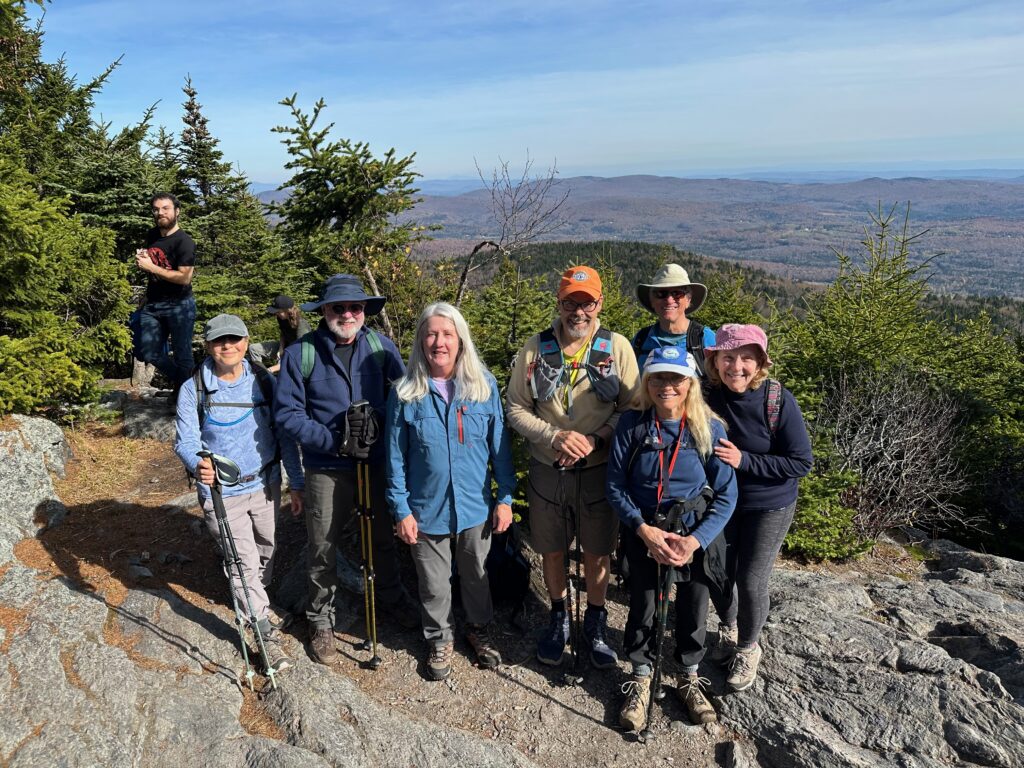
This fall, Philip, a new GMC board member, led three group hikes geared at older adults: Haystack Mountain in Wilmington; Mt. Pisgah in the Northeast Kingdom; and Silver Lake in Salisbury.
“It was a gorgeous, warm October day, with great autumn color. One member of our party was an amateur botanist and identified the fungi, moss, and ferns we passed along the way. Another had just had a double hip replacement less than two months earlier. She had registered because she felt the pace, geared toward mature hikers, would allow her to keep up.”
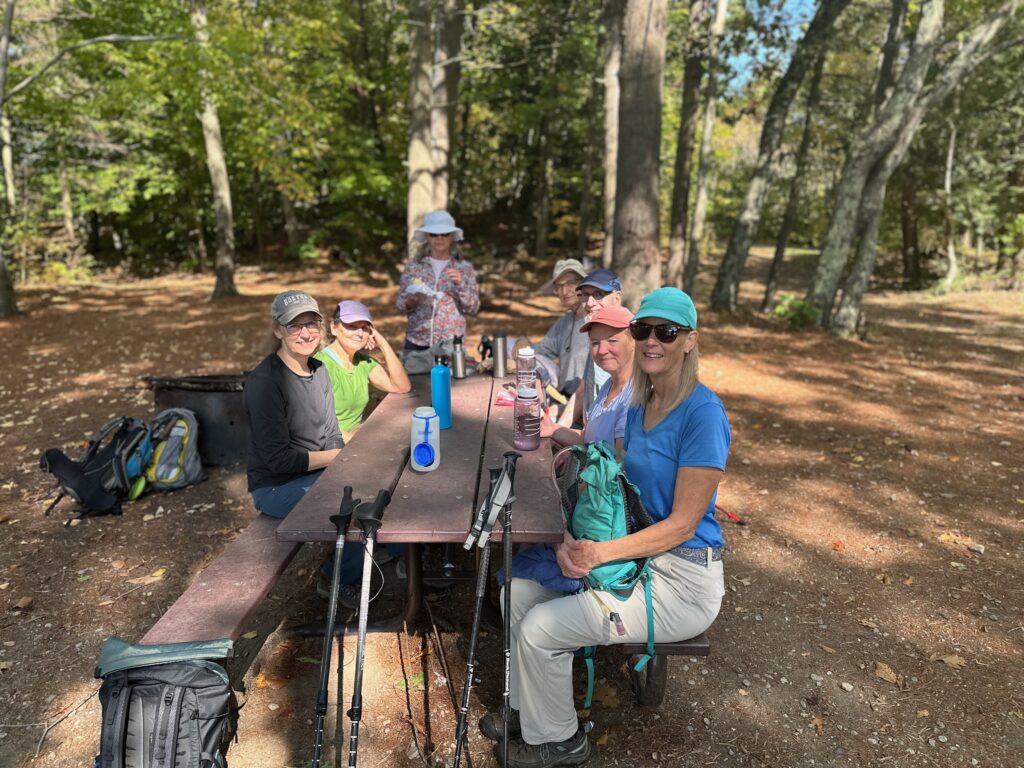
Exploring Silver Lake in the Moosalamoo National Recreation Area. I” had originally planned a hike to Rattlesnake Point but decided to scale it back to make it more accessible to the group,” Philip explained.
Special Considerations for Hiking Over 60
The right preparation enhances safety and comfort, especially for mature hikers. Whether you are new to hiking, returning to it after some years away, or want to encourage friends and loved ones to explore hiking, here are Philip’s top tips.
Footwear
If you can, invest in high-quality hiking boots, trail shoes, or trail runners with good arch support and ankle stability. Don’t be afraid to experiment with different footwear. Consider using insoles, especially if you already wear them in your street shoes. They can provide additional arch support or cushioning.
Trekking Poles
These are especially helpful for those over 60 because they:
- Provide balance on uneven terrain.
- Reduce strain on knees and hips during descents.
- Improve posture and upper body engagement.
Adapt to Changing Abilities
Knees aching? Shorter hikes, gentler inclines, and poles help. Vision issues? Choose well-marked, wider paths. Balance concerns? Trekking poles, flat trails, and hiking with a buddy add confidence. Arthritis or joint pain? Talk to your doctor. Hiking can often help manage arthritis, especially with proper footwear, poles, and gentle terrain.
Know Your Limits
Your endurance and pace may differ from others, or from your younger self. That’s OK. Take breaks, don’t rush, and turn back if you’re feeling unwell or overtired.
Avoid Slippery or Steep Trails
Stick to trails appropriate for your skill level. Many trail apps and guidebooks state difficulty and conditions. Use them to plan accordingly. Consider recent weather and seasonal conditions as well.
The Hiking Over 60 Workshop at the GMC Visitor Center has been canceled due to low registration. Please contact the Visitor Center with any questions: [email protected].
















Leave a Reply