


This article was written by assistant trail crew lead Jivana Esposito and appeared first in the Fall 2025 Long Trail News.
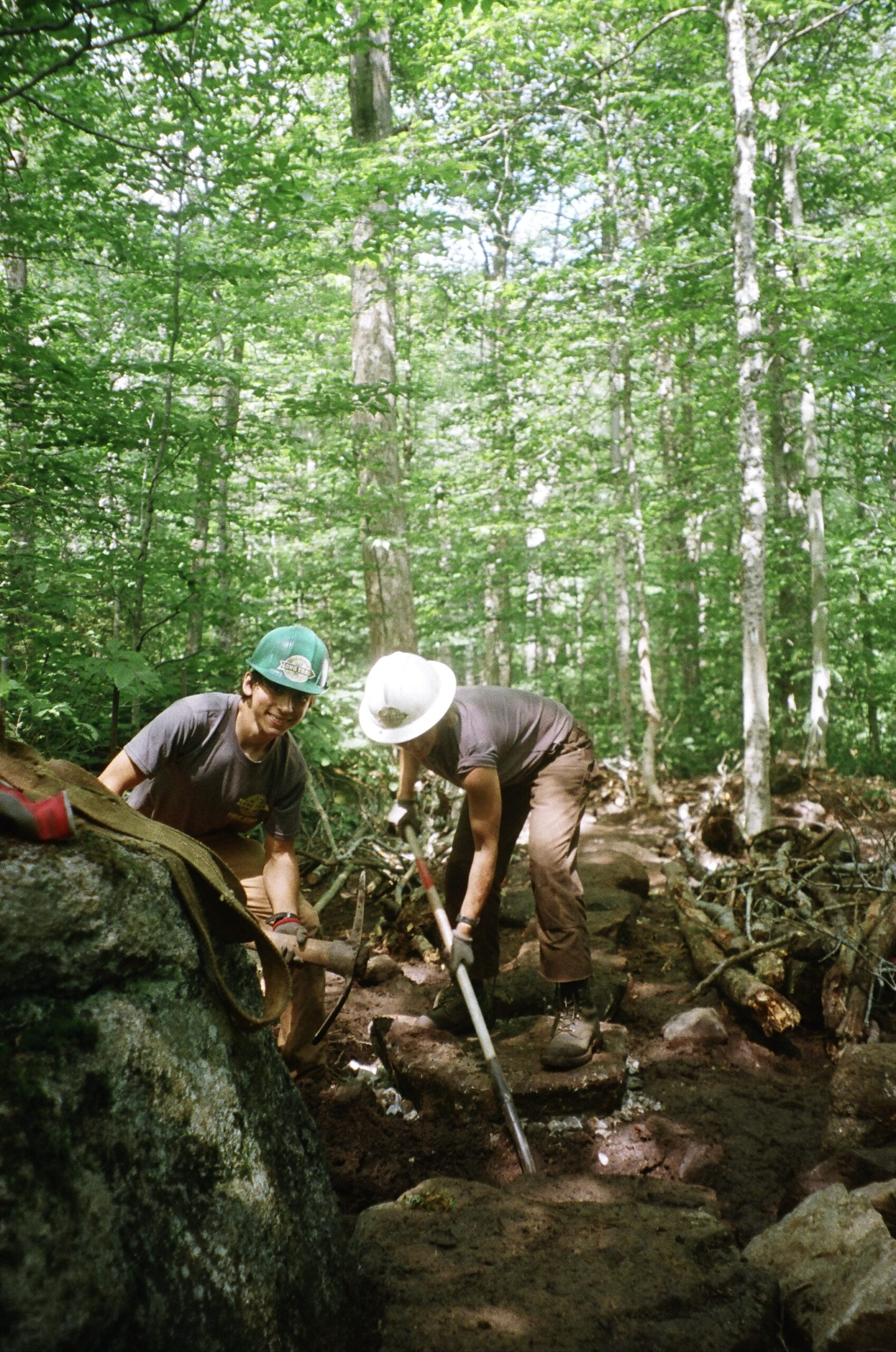
As I dive deeper into the trail world, I find myself extremely inspired by archival pictures of trail crews in the early 20th century, when film photography was just evolving. Photos of crews cutting trail bench into sheer hillsides, using historic power carriers and pneumatic jackhammers, and creating camp communities, which inspired how we live in the field now.
Trail work is not a very well-known profession. Many people have a very limited understanding of what our job entails or do not take it very seriously. But what most fail to realize is that trail work is one of the oldest trades in history. That’s why documentation is so important in this field of work.
Long before there was standardized and recreational trail building, indigenous people built trail networks to establish their communities and for ceremonial purposes. The first recreational trails aimed at tourists developed in the 1850s in California and the Northeast. Being a part of the evolution of trail design means being part of a rich and long history of good craftsmanship that can endure generations. It feels important to document my trail crew’s experience to be able to show our families, friends, and others that we did historic work while building community and strengthening our will.
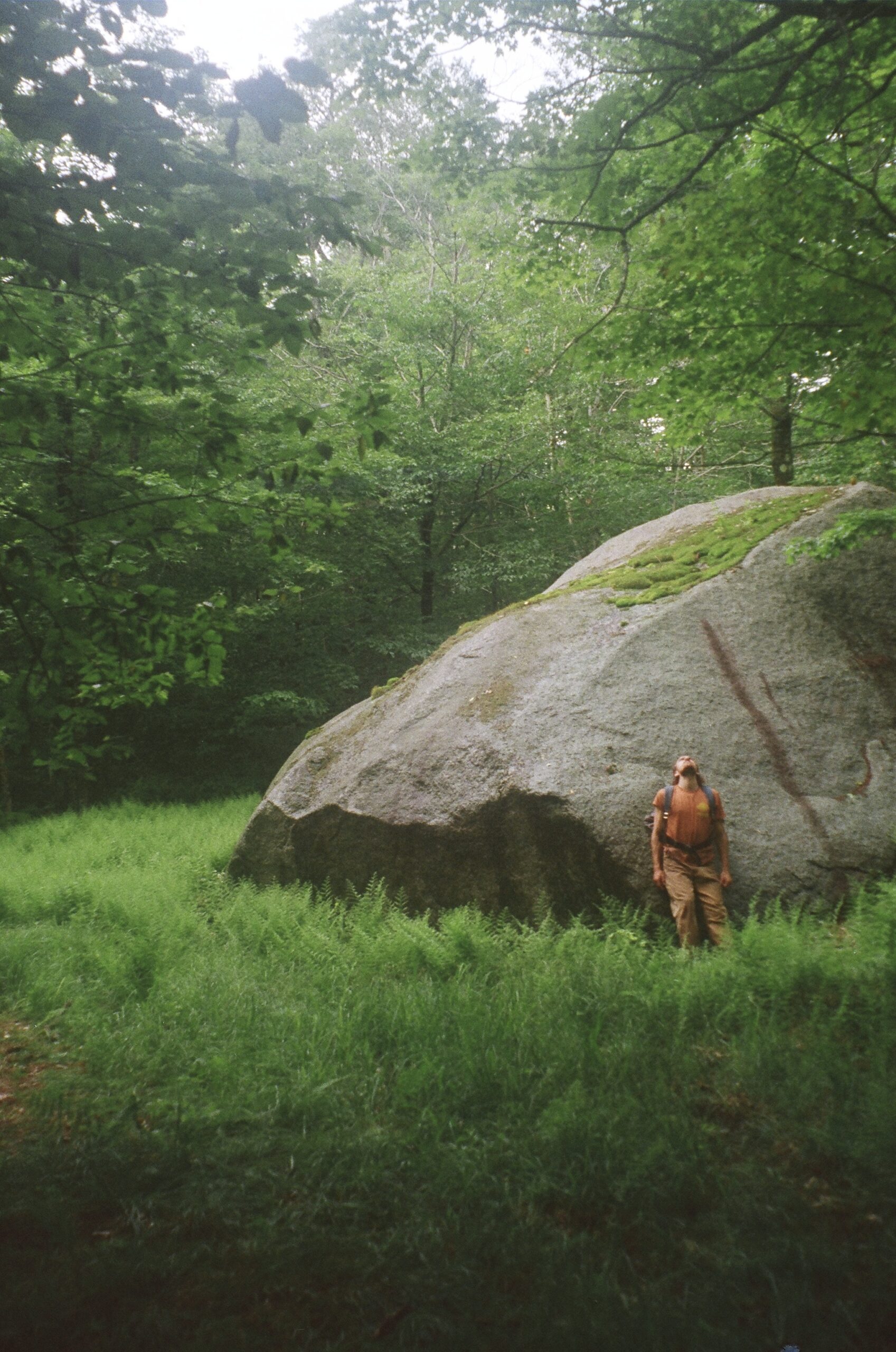
But the documentation is also an effort to show trail work as a legitimate profession that requires physically demanding labor in rustic, often-isolating settings, and in inescapable weather conditions. We are a part of something special that has gone on long before us and will continue long after us. I think capturing the season on film is just a small way we can hold onto the memories we’ve created together.




Jivana Esposito was the assistant trail crew lead for GMC’s southern Long Trail Patrol crew during the 2025 field season. She previously completed the AmeriCorps Backcountry Trails Program in California and was a wildland firefighter in Oregon.
The crew spent 10 weeks on the Long Trail/Appalachian Trail south of Risky Ranch Road, installing trail hardening structures and reroutes to alleviate the perpetual muddiness of the trail there.
















Leave a Reply